









The Shift From Endless Choice to Personal Relevance
Customers are no longer satisfied with endless product choices.
They want products that feel relevant before they buy. They want to shape the experience, select the right options, preview the outcome, and feel confident that the product fits their needs.
This is why product customization is becoming a powerful conversion advantage for eCommerce brands.
A store can offer hundreds of products, colors, sizes, styles, bundles, or configurations. But too many choices can make the buying journey feel overwhelming instead of helpful. When shoppers are left to compare everything on their own, they may hesitate, delay the purchase, or leave the store altogether.
Customization changes that experience.
It helps shoppers move from browsing generic options to building something that feels more personal, specific, and useful. Whether it is selecting product features, choosing a design, configuring a bundle, previewing a final look, or receiving guided recommendations, customization gives customers a stronger sense of control.
The new eCommerce experience is not only about showing more products.
It is about helping shoppers find, shape, and trust the right product faster.
Why Standard Product Pages Are Losing Influence
Traditional product pages are built around a simple model: show the product, list the features, display images, add reviews, and encourage checkout.
That still matters, but it is not always enough.
Modern shoppers often need more confidence before they buy. They may want to know how a product will look, fit, function, match their preference, or solve their specific need. Static product pages can make this harder when customers must imagine the final result on their own.
This is where eCommerce product customization creates a stronger experience.
Instead of asking shoppers to choose from fixed options, brands can let them interact with the product in a more meaningful way.
A shopper may customize color, size, material, packaging, engraving, layout, bundle components, fit, quantity, accessories, or product specifications. Each selection helps the product feel less generic and more personally relevant.
When customers can shape the product experience, they are more likely to feel confident about the purchase.
Where Product Choice Creates Buyer Friction
More options do not always create better decisions. Without the right structure, product choice can create confusion, hesitation, and lower conversion.
| Customer Friction | Why It Hurts Confidence | Customization Strategy |
|---|---|---|
| Too many generic options | Shoppers may feel overwhelmed when they must compare too many similar products without clear guidance. | Use guided product configuration to help customers narrow choices based on needs, preferences, or use cases. |
| Lack of confidence | Customers may hesitate when they cannot see how their selections affect the final product. | Add visual previews, real-time selections, and clear option summaries before checkout. |
| Unclear product fit | Buyers may not know which version, size, feature, or bundle is right for them. | Use personalized recommendations based on customer intent, behavior, product rules, or buying preferences. |
| Standard PDP experience | Static pages may not support products that require selection, comparison, or configuration. | Create interactive product flows that make selection easier and more engaging. |
| Low emotional connection | A generic buying journey may not make the customer feel connected to the product. | Build an ownership-driven product experience where shoppers feel involved before they buy. |
How Customization Builds Buyer Confidence
Confidence is one of the most important parts of online buying.
Customers cannot physically touch, try, or compare products the same way they can in a store. That means the digital experience must work harder to reduce uncertainty.
Product personalization helps by giving customers more control over the final purchase.
When shoppers can configure a product, preview options, compare selections, and understand what they are getting, the decision becomes easier. Instead of wondering whether the product is right, they can actively shape the product around their needs.
Customization can improve buyer confidence by helping customers:
- Understand available options clearly
- See how selections affect the final product
- Choose features based on real needs
- Avoid buying the wrong version
- Feel more connected to the product
- Reduce uncertainty before checkout
- Make decisions with less support dependency
A confident buyer is less likely to abandon the cart and more likely to complete the purchase.
Guided Configuration Turns Choice Into Clarity
Choice becomes useful when it is guided.
A customer should not have to understand every product detail, compatibility rule, feature difference, or configuration option on their own. The store experience should help them move through the decision in a logical way.
That is the role of a product configurator.
A strong configurator helps shoppers select the right options step by step. It can ask simple questions, filter available choices, remove incompatible combinations, suggest relevant upgrades, and show the impact of each decision.
For example, a shopper may choose a product type first, then size, then color, then material, then accessories. Each step narrows the path and makes the next choice easier.
This reduces decision fatigue.
Instead of presenting every option at once, guided configuration creates a more focused buying journey.
Visual Previews Reduce Purchase Hesitation
A major reason shoppers hesitate is uncertainty.
They may wonder: Will this look right? Did I select the correct option? Does this color match? Is this the version I want? What will the final product look like?
A visual product preview helps answer those questions before checkout.
When shoppers can see selections update in real time, the product becomes easier to understand. A visual preview can show color changes, design updates, product layouts, bundle selections, engraving placement, material differences, or configuration results.
This helps customers feel more certain about what they are buying.
Visual previews are especially valuable for products where appearance, fit, design, or configuration matters. They reduce the gap between imagination and purchase decision.
The more clearly shoppers can see the final product, the less risk they feel.
Personalized Recommendations Make Selection Easier
Not every shopper wants to build a product from scratch.
Some customers want guidance.
They may need help choosing the right size, product type, compatible accessory, bundle, or feature set. Others may not know which product best matches their use case.
This is where personalized shopping experience strategies can improve the journey.
Recommendations can be based on browsing behavior, previous purchases, customer profile, product compatibility, quiz answers, category interest, or similar buyer behavior.
Instead of showing the same options to everyone, the store can guide customers toward products that fit their needs.
For example:
- A first-time buyer may see best-fit recommendations.
- A repeat customer may see compatible accessories.
- A shopper viewing premium products may see upgraded configurations.
- A customer buying for a specific use case may see curated bundles.
- A returning visitor may see saved or recently selected options.
Personalization helps shoppers make faster decisions without feeling pushed into irrelevant choices.
When Shoppers Feel Ownership Before Checkout
Customization does more than improve functionality.
It creates emotional connection.
When customers help shape a product, they begin to feel ownership before the purchase is complete. The product no longer feels like one option from a catalog.
It feels like something they selected, adjusted, or built for themselves.
This ownership effect can make the product more memorable and more valuable in the customer’s mind.
That is why customized products can often create stronger engagement than standard products. The shopper has invested time and attention into the selection process. They have made choices that reflect their preference, style, need, or identity.
This emotional connection can support conversion because the customer is no longer simply comparing products.
They are evaluating something that already feels partly theirs.
Interactive Product Experiences Support Conversion Growth
A strong product experience is not just a design feature.
It is part of eCommerce conversion optimization.
Interactive customization can reduce friction across the buying journey. It can help customers understand options, compare features, personalize selections, confirm product fit, and move to checkout with more confidence.
Interactive experiences may include:
- Product configurators
- Real-time visual previews
- Guided quizzes
- Personalized recommendations
- Bundle builders
- Size or fit tools
- Compatibility selectors
- Product comparison flows
- Saved configurations
- Dynamic pricing updates
- Option-based product summaries
These tools help customers make decisions faster and with fewer doubts.
For merchants, they can also reduce support questions, lower product mismatch issues, improve engagement, and strengthen the overall buying experience.
Product Customization Needs a Strong Data Foundation
Customization works best when product data is clean, structured, and reliable.
If product attributes are incomplete, option rules are unclear, compatibility logic is missing, or images are inconsistent, the customization experience can create confusion instead of confidence.
A strong interactive product experience depends on accurate product data.
Merchants should review:
- Product attributes
- Option rules
- Compatibility logic
- Variant relationships
- Image and media quality
- Pricing rules
- Inventory availability
- Bundle structures
- Personalization limits
- Configuration dependencies
- Product descriptions
- Checkout handoff
The customer should never feel that customization creates uncertainty.
Every selection should make the purchase clearer.
The New Role of Product Experience in Conversion Growth
Product experience is becoming a major part of growth strategy.
Customers do not only judge a store by price, delivery, or product quality. They also judge how easy it is to choose the right product.
A strong product experience helps shoppers feel informed, supported, and in control. It reduces the mental work required to make a decision.
That matters because conversion often depends on confidence.
When customers understand their options, see the final result, and feel that the product matches their needs, they are more likely to move forward.
This is why product page optimization should go beyond static content. Product pages should help shoppers interact, personalize, compare, and decide.
The best eCommerce experiences do not simply display products.
They guide customers toward ownership.
How Brands Can Build a Customization Roadmap
Product customization does not need to start with a complex build.
Brands can begin by identifying where customers hesitate most.
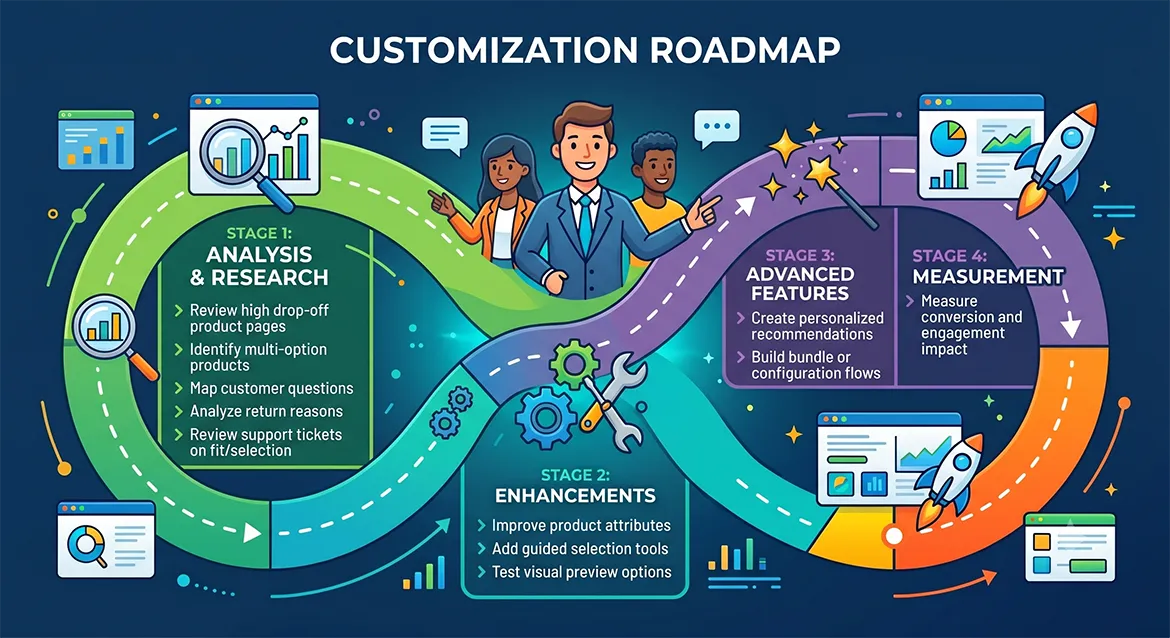
The goal is to add customization where it reduces friction and increases confidence.
Not every product needs a configurator. But every product experience should help the customer feel more certain about the purchase.
From Product Options to Personal Ownership
The future of eCommerce is not just more choice.
It is a better choice.
Customers want to feel that the product they select fits their needs, preferences, lifestyle, or goals. They want clarity before checkout and confidence after purchase.
Product customization helps bridge that gap.
It turns static product selection into a more interactive, personal, and decision-friendly experience.
When shoppers can configure, preview, personalize, and trust what they are buying, they are more likely to complete the purchase and remember the brand.
Improve Buyer Confidence With Product Customization
Want to improve buyer confidence with product customization?
Create more interactive, personalized, and conversion-focused shopping experiences.