









Magento’s Strength Extends Beyond the Codebase
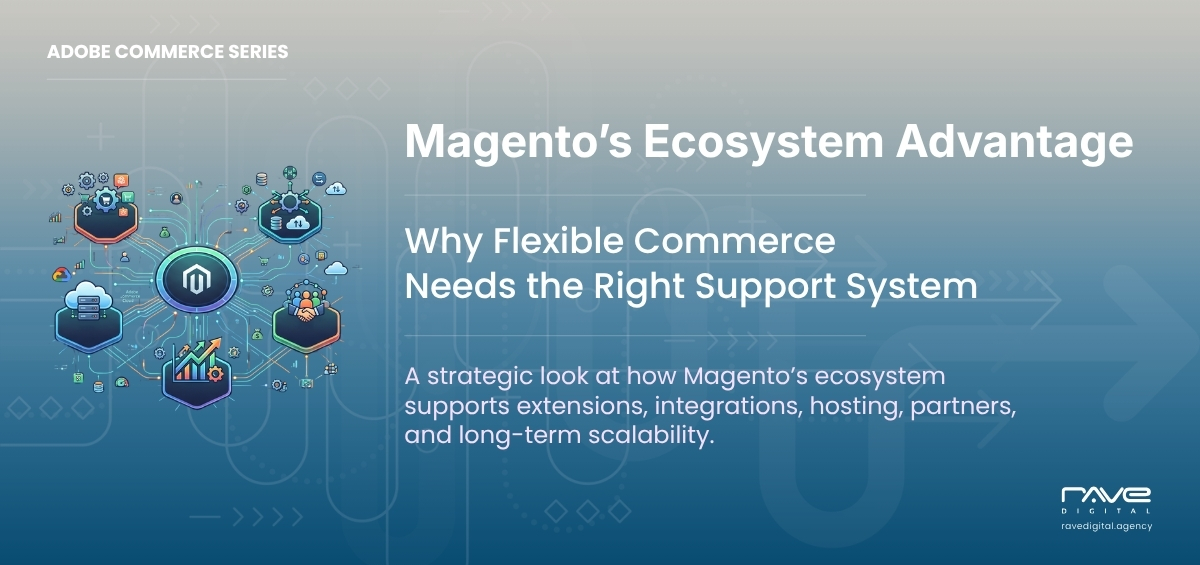
Magento is not just a commerce platform. It is an ecosystem shaped by developers, agencies, merchants, extension providers, solution partners, and contributors who continuously improve how ecommerce stores are built, optimized, and scaled.
For merchants, this matters because store success depends on more than platform features.
It depends on knowing which extensions to trust, how to plan upgrades, how to avoid development mistakes, how to solve recurring performance issues, and how to make better long-term technical decisions.
That is where Magento open source knowledge becomes a major advantage.
The Magento ecosystem gives merchants access to shared documentation, forums, tested solutions, community feedback, extension insights, implementation patterns, and real-world lessons from stores facing similar challenges.
This community advantage helps merchants build smarter instead of starting from scratch every time.
Why Community Knowledge Matters for Merchants
Many ecommerce challenges are not completely new.
A merchant planning a Magento upgrade may not be the first to face compatibility concerns. A store dealing with checkout conflicts may not be the first to troubleshoot a payment or shipping dependency.
A team comparing extensions may not be the first to question performance impact, support quality, or long-term reliability.
The value of the Magento community is that it turns individual experience into shared learning.
Merchants can benefit from the knowledge of developers who have solved similar issues, agencies that have managed complex builds, contributors who understand platform behavior, and extension providers who improve features based on real merchant needs.
This does not mean every community answer should be applied without review. But it does mean merchants have access to a much wider knowledge base than their internal team alone.
When used correctly, community insight can reduce guesswork, improve planning, and help teams make more confident decisions.
Where Magento Community Knowledge Helps Most
Magento’s open-source ecosystem supports merchants across many technical and operational decisions. It helps teams avoid common mistakes, compare options, and build with better context.
| Merchant Challenge | How Community Knowledge Helps |
|---|---|
| Extension selection confusion | Community feedback, reviews, developer discussions, and agency experience can help merchants identify reliable extension options before implementation. |
| Upgrade uncertainty | Magento documentation, release notes, compatibility discussions, and shared upgrade experiences help reduce risk during version planning. |
| Performance issues | Community-tested patterns can help solve recurring bottlenecks related to caching, indexing, frontend assets, database load, and infrastructure setup. |
| Development mistakes | Open-source examples, code discussions, and implementation best practices help developers avoid poor architecture and risky shortcuts. |
| Limited internal expertise | Merchants can access broader ecosystem insight through forums, partners, documentation, contributors, and experienced Magento professionals. |
From Documentation to Better Business Decisions
Magento documentation is often viewed as a developer resource, but it can also support business decision-making.
Clear documentation helps merchants understand what is native to the platform, what requires customization, what may need an extension, and what should be handled through a third-party integration.
This is important because many costly ecommerce decisions happen when teams misunderstand platform capability.
A merchant may request a custom build for something Magento already supports. Another may install an extension when a configuration change would be enough. A team may delay an upgrade because the process feels unclear, even when proper planning could reduce the risk.
Strong Magento documentation helps bridge this gap.
It gives developers better technical direction and gives business teams more clarity around feasibility, timelines, dependencies, and trade-offs.
When documentation is paired with expert review, merchants can make smarter decisions about what to build, what to configure, what to optimize, and what to avoid.
How Open Source Learning Reduces Project Risk
Every Magento project carries some level of risk.
There may be extension conflicts, custom code dependencies, upgrade blockers, performance concerns, integration issues, or data structure problems. These risks increase when decisions are made without enough technical context.
Open source knowledge helps reduce this risk by making common issues more visible.
Before implementing a feature, teams can often review known limitations, compatibility concerns, configuration notes, community feedback, or similar use cases. This helps merchants avoid repeating mistakes that others have already documented.
For example, community learning can help teams understand:
- Which extensions may affect checkout speed
- Which upgrade paths require extra testing
- Which caching patterns support better performance
- Which customization approaches may create technical debt
- Which integration methods are easier to maintain
- Which admin workflows can be improved without over-customization
This does not replace proper development review, but it improves decision quality before work begins.
The Ecosystem Advantage Smart Merchants Use
Smart merchants do not treat Magento as only software.
They treat it as an ecosystem.
That ecosystem includes Magento developers, certified agencies, extension vendors, hosting partners, solution providers, documentation, release notes, forums, GitHub discussions, community events, and merchant case studies.
Each part of the ecosystem can provide a different type of value.
Developers help solve implementation challenges. Agencies bring cross-project experience. Extension providers improve feature availability. Documentation supports technical clarity. Community discussions reveal real-world edge cases. Events and shared sessions bring new ideas into the merchant roadmap.
Together, these resources help merchants make better decisions before investing time, budget, or development effort.
This is especially valuable for growing stores that need to balance flexibility with stability.
Magento can support highly customized ecommerce operations, but merchants get better results when they use ecosystem knowledge to guide planning and execution.
Magento Extensions Need Community-Aware Evaluation
Extensions are one of the most powerful parts of the Magento ecosystem.
They allow merchants to add functionality faster, improve workflows, support integrations, and reduce custom development effort.
But extension selection should not be based only on feature lists.
Merchants should also consider support quality, update frequency, compatibility, performance impact, code quality, documentation, and real-world feedback.
This is where Magento extension knowledge from the community becomes useful.
Reviews, implementation discussions, developer feedback, and agency experience can help merchants understand whether an extension is a strong fit for their store.
The goal is not to install more extensions.
The goal is to choose the right extensions, use them correctly, and avoid unnecessary complexity.
Community Knowledge Supports Better Upgrades
Magento upgrades can feel risky because stores often include custom modules, third-party extensions, integrations, themes, payment methods, shipping logic, and tracking setups.
But the upgrade process becomes more manageable when teams use the knowledge already available across the ecosystem.
Release notes, compatibility documentation, patch discussions, extension updates, developer forums, and agency experience can help teams prepare for what may break, what needs testing, and what should be reviewed before deployment.
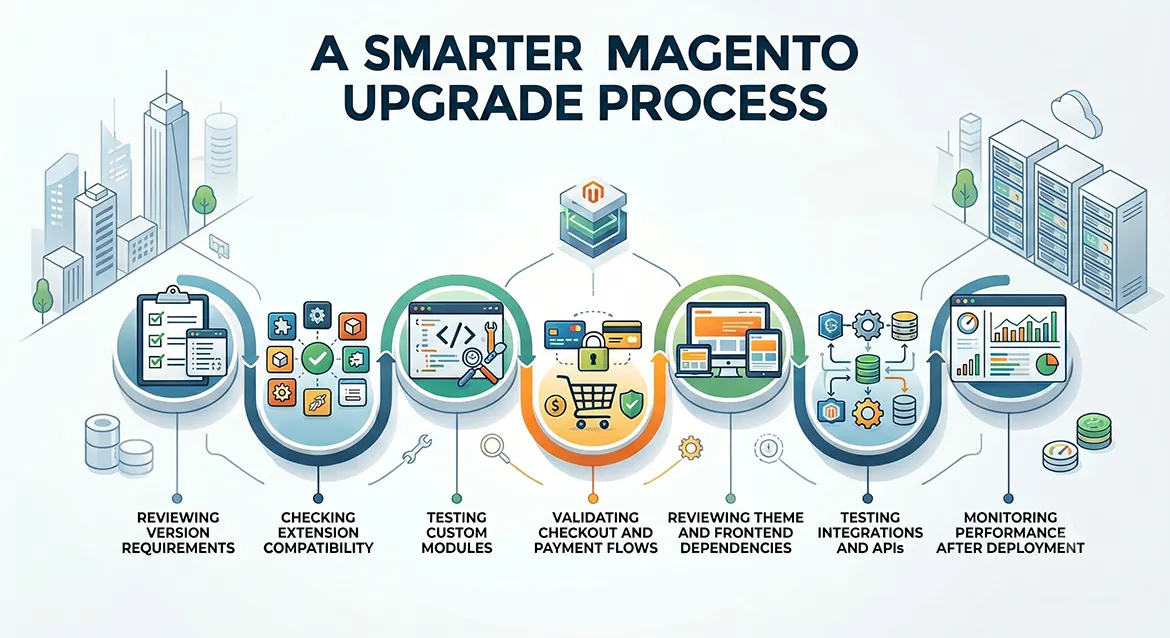
Community knowledge helps merchants understand these areas before the upgrade becomes urgent.
Performance Improvements Often Come From Shared Patterns
Many Magento performance optimization issues follow familiar patterns.
Slow pages may be related to caching, unoptimized images, heavy scripts, poor indexing, inefficient queries, unnecessary extensions, weak hosting, or frontend complexity.
Because many stores face similar challenges, the Magento community has developed recurring best practices for diagnosing and improving performance.
These shared patterns help teams avoid random fixes.
Instead of guessing, merchants can review common performance layers such as hosting, CDN, cache configuration, database health, frontend assets, cron jobs, indexing, and third-party scripts.
This makes performance work more structured and easier to prioritize.
A strong Magento store does not rely on one performance fix. It uses ecosystem knowledge to review the full technical environment.
Open Source Does Not Mean Do-It-Yourself Alone
One common misunderstanding is that open source means merchants must solve everything themselves.
That is not the case.
Magento open source gives merchants flexibility, visibility, and access to a global knowledge base. But applying that knowledge correctly still requires experience.
A forum answer may explain one possible solution, but it may not account for a store’s custom modules, theme, integrations, business workflows, or performance requirements. Documentation may show how a feature works, but expert review may still be needed to decide whether it is the right fit.
The best results come when merchants combine community knowledge with professional implementation.
That means using open-source insight as a guide, then applying it through proper audits, planning, development, testing, and ongoing optimization.
Turning Community Knowledge Into Smarter Magento Growth
The real value of the Magento community is not just access to information.
It is the ability to turn that information into better decisions.
When merchants use ecosystem knowledge correctly, they can reduce project risk, choose better extensions, plan safer upgrades, improve performance, avoid unnecessary customization, and make stronger long-term decisions.
Magento’s strength is not only its flexibility.
It is the community that helps merchants use that flexibility wisely.
Build Smarter With Magento Best Practices
Need help applying Magento best practices to your store?
Translate ecosystem knowledge into practical improvements for performance, extensions, upgrades, and long-term ecommerce growth.