









A Platform Stability Use Case for Growing Magento Stores
For many Magento and Adobe Commerce merchants, growth does not only depend on new features, new campaigns, or new design updates.
It also depends on how stable, clean, secure, and maintainable the platform is behind the scenes.
Over time, Magento stores can collect technical debt through rushed customizations, outdated modules, old code, unoptimized assets, missed security patches, and repeated short-term fixes.
At first, these issues may not seem urgent.
The store still runs. Orders still come in. Teams continue working around small problems.
But as the business grows, Magento technical debt can start affecting performance, development speed, SEO readiness, upgrade planning, security, and the customer experience.
This use case focuses on how a growing Magento store improved its platform foundation through code cleanup, security patching, version upgrades, frontend asset optimization, and technical SEO improvements without exposing sensitive implementation details.
The goal was not simply to update the platform.
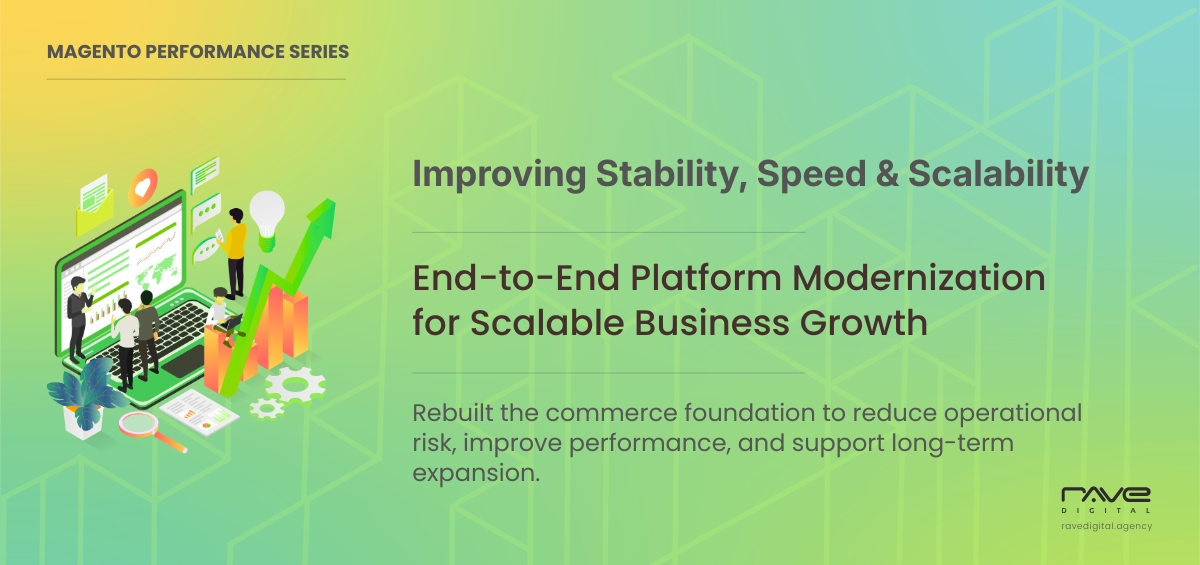
The real objective was to create a more stable, secure, and scalable Magento environment that could support future growth with less operational risk.
How Magento Technical Debt Becomes a Revenue Risk
Technical debt often builds gradually.
A merchant may add an extension to solve one issue. A custom module may be created for a temporary requirement. A theme update may add extra files. A security patch may be delayed because other work feels more urgent.
Individually, these issues may seem manageable.
Together, they can create platform friction.
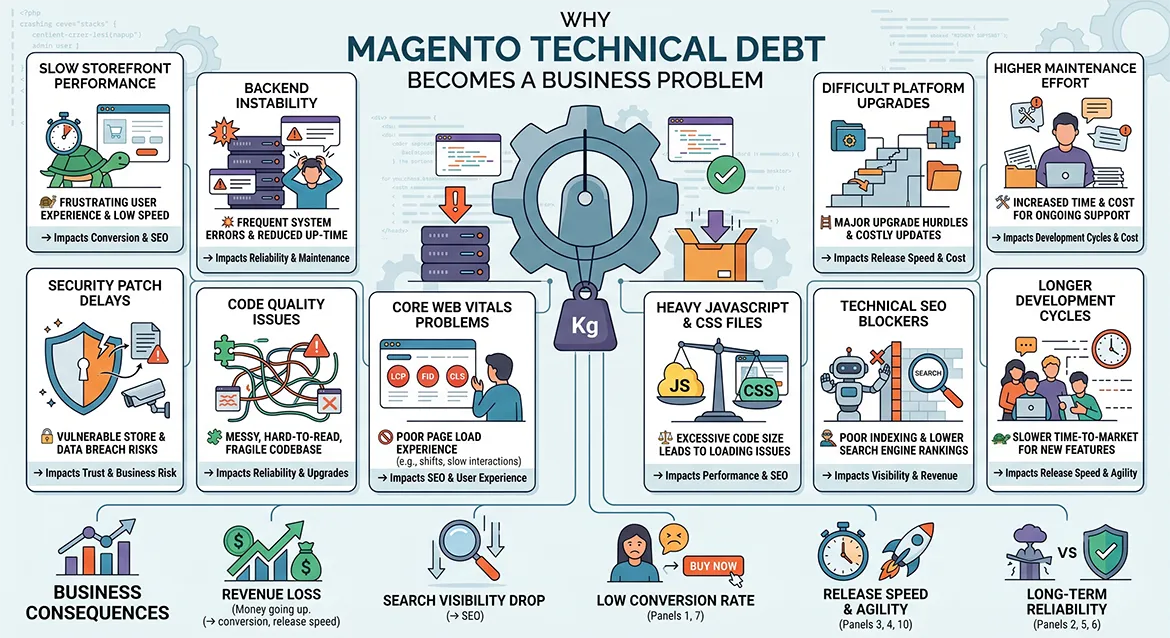
Common signs of Magento technical debt include:
- Slow storefront performance
- Backend instability
- Difficult platform upgrades
- Higher maintenance effort
- Security patch delays
- Code quality issues
- Core Web Vitals problems
- Heavy JavaScript and CSS files
- Technical SEO blockers
- Longer development cycles
For merchants, this is not just a development concern.
It can affect revenue, search visibility, conversion rate, release speed, and long-term platform reliability.
What This Meant for the Business
| Challenge | Business Impact |
|---|---|
| Outdated platform version | Security, compatibility, and upgrade risks increased |
| Code quality issues | Development and maintenance became harder over time |
| Unoptimized frontend assets | Page experience and Core Web Vitals could be affected |
| Technical SEO gaps | Crawlability, indexation, and organic performance could suffer |
| Security patch backlog | Platform risk increased if vulnerabilities were not addressed |
| Extension and customization debt | Store changes required more review and testing |
When technical debt remains unresolved, every future improvement becomes harder.
A simple update can take longer. A performance issue can become harder to isolate. A platform upgrade can become more expensive. A new feature can create unexpected conflicts.
The Core Problem: The Platform Needed a Stronger Foundation
The issue was not that Magento could not support growth.
The issue was that the platform foundation needed cleanup, modernization, and better long-term maintainability.
As the store evolved, older code, outdated files, and accumulated customizations created hidden risk across the platform.
This created three major concerns.
First, platform stability needed to improve so the store could support day-to-day operations more reliably.
Second, security readiness needed to be strengthened through version updates and important patches.
Third, performance and SEO readiness needed improvement because heavy assets, technical gaps, and code debt can affect how customers and search engines experience the site.
The objective was to reduce platform risk without disrupting the live commerce experience.
The Modernization Approach
1. Reviewing the Magento Platform for Technical Debt
The first step was identifying the areas where accumulated debt was affecting maintainability, performance, and upgrade readiness.
This included reviewing the platform for:
- Code quality issues
- Outdated customizations
- Unused or heavy modules
- Frontend asset bloat
- Upgrade blockers
- Security patch gaps
- Technical SEO issues
- Performance bottlenecks
The focus was not on changing everything at once.
The focus was on identifying which issues created the highest risk for stability, performance, security, and long-term scalability.
Merchant Impact
| Before Review | After Review |
|---|---|
| Technical debt was spread across the platform | Priority issues became easier to identify |
| Upgrade risks were harder to estimate | Platform modernization could be planned more clearly |
| Code quality issues affected maintainability | Cleanup priorities became more structured |
| Performance and SEO gaps were harder to isolate | Optimization opportunities became more visible |
For merchants, a proper Magento technical audit helps turn hidden platform risk into a clear improvement roadmap.
2. Strengthening Platform Stability Through Version Upgrades
A key part of the modernization effort was moving the store toward a more current and stable Magento version.
Magento upgrades are not only about getting the latest features.
They also help merchants improve security, compatibility, performance readiness, and long-term support.
The upgrade path focused on creating a more reliable platform foundation while reducing risks caused by outdated versions.
This included careful review of:
- Magento version compatibility
- Extension compatibility
- Theme stability
- Custom module behavior
- Security patch requirements
- Testing and deployment readiness
The platform was upgraded across versions and stabilized on Magento 2.4.7-p9, helping create a stronger base for future improvements.
Why This Matters for Merchants
| Upgrade Area | Business Value |
|---|---|
| Magento version upgrade | Improves long-term support and compatibility |
| Security patching | Reduces exposure to known vulnerabilities |
| Extension compatibility review | Helps prevent conflicts after updates |
| Custom code validation | Reduces risk of broken business workflows |
| Testing and deployment planning | Helps protect the live store experience |
For merchants, staying updated helps reduce avoidable risk and makes future improvements easier to manage.
3. Cleaning Up Code Quality Issues
Over time, Magento stores can collect code quality issues from custom modules, old development practices, quick fixes, and outdated implementation patterns.
These issues may not always be visible to shoppers, but they can affect how easily developers maintain, upgrade, and extend the store.
The modernization process included a structured review of code quality, coding standards, and maintainability concerns.
Instead of exposing every technical detail, the work focused on improving the platform’s ability to support future development with less friction.
What Was Improved
- Cleaner code structure
- Reduced maintenance risk
- Better upgrade readiness
- Improved developer efficiency
- Lower risk of future conflicts
- More predictable testing and deployment
For merchants, this matters because clean code helps the business move faster.
When the codebase is healthier, future changes become easier to plan, test, and release.
4. Improving Frontend Assets for Better Page Experience
Performance issues are not always caused by hosting or backend infrastructure.
Heavy frontend assets can also slow the customer experience.
Large JavaScript files, excessive CSS, outdated theme assets, unused scripts, and uncompressed files can affect page speed, Core Web Vitals, crawl efficiency, and conversion potential.
The modernization effort included a large-scale asset optimization review to reduce unnecessary frontend weight.
This included optimizing more than 2,000 JavaScript and CSS files through cleanup, compression, and minification.
Before vs. After
| Before Optimization | After Optimization |
|---|---|
| Heavy frontend assets increased page weight | Assets became lighter and more efficient |
| Unoptimized JavaScript and CSS affected page experience | Files were compressed and minified |
| Page performance improvements were harder to achieve | Core Web Vitals readiness improved |
| Extra frontend weight affected usability | Storefront experience became smoother |
For merchants, Magento performance optimization is not only about servers.
It is also about making the storefront lighter, cleaner, and easier for customers and search engines to access.
5. Strengthening Technical SEO Readiness
Platform modernization also created an opportunity to improve Magento technical SEO.
Technical SEO is important because search engines need to crawl, understand, and index the store efficiently.
If the platform has performance issues, crawl barriers, duplicate content problems, weak metadata, broken internal links, poor page structure, or asset-heavy pages, organic performance can suffer.
The modernization approach included reviewing and improving the technical foundation that supports search visibility.
Key focus areas included:
- Crawlability
- Indexation readiness
- Page experience
- Core Web Vitals
- Metadata structure
- Internal linking
- URL and canonical consistency
- Structured content readiness
- Frontend asset performance
For merchants, this helps protect more than rankings.
It supports long-term organic visibility, better landing page performance, and a stronger foundation for SEO and AEO growth.
6. Reducing Future Maintenance and Upgrade Risk
The final part of the modernization approach focused on making future platform work easier and less risky.
A Magento store with less technical debt is easier to upgrade, easier to maintain, and easier to improve.
The cleanup and modernization work helped reduce friction across:
This does not mean the platform no longer needs ongoing maintenance.
It means the store is better prepared for continuous improvement.
The Result: A Cleaner, Safer, and More Maintainable Magento Platform
By reducing technical debt, updating the platform, applying security improvements, cleaning up code quality issues, and optimizing frontend assets, the Magento store became better prepared for long-term growth.
Improvement Area and Business Outcome
| Improvement Area | Business Outcome |
|---|---|
| Platform modernization | Stronger Magento foundation for future growth |
| Magento 2.4.7-p9 upgrade | Improved security, compatibility, and stability |
| Security patching | Reduced exposure to known platform risks |
| Code cleanup | Improved maintainability and development efficiency |
| Frontend asset optimization | Better page experience and Core Web Vitals readiness |
| Technical SEO improvements | Stronger crawlability, indexation, and organic visibility foundation |
| Maintenance risk reduction | Future updates became easier to plan and manage |
Most importantly, the store gained a stronger technical foundation without forcing the business to pause growth initiatives.
What Magento Merchants Can Learn From This Use Case
Magento technical debt is easy to ignore until it starts slowing down the business.
A store may appear to work normally on the surface, while the platform underneath becomes harder to maintain, slower to optimize, and riskier to upgrade.
For growing merchants, technical debt can affect:
- Site performance
- Security readiness
- SEO visibility
- Development speed
- Upgrade planning
- Customer experience
- Platform stability
- Long-term scalability
The biggest takeaway is simple:
Magento modernization is not just a technical cleanup project. It is a growth protection strategy.
When the platform is cleaner, more secure, and easier to maintain, the business can move faster with less risk.
Is Magento Technical Debt Holding Your Store Back?
If your Magento store is experiencing:
- Slow performance
- Delayed upgrades
- Security patch concerns
- Heavy JavaScript or CSS files
- Core Web Vitals issues
- Technical SEO gaps
- Extension conflicts
- Code quality problems
- High maintenance effort
- Long development cycles
It may be time to review the technical foundation behind your store.
At Rave Digital, we help Magento and Adobe Commerce merchants reduce technical debt, improve platform stability, strengthen security, optimize performance, and prepare stores for long-term scalability.
Build a Cleaner, Faster Magento Store
Improve performance, reduce maintenance risk, strengthen security, and create a stronger foundation for scalable growth.